Pest Management for Agricultural Crops
Comprehensive guide to identifying, preventing, and controlling common agricultural pests that affect crops in Tagudin, Ilocos Sur.
Important Notice
Rice Pest Management
Rice is the primary crop in Tagudin, and effective pest management is crucial for maintaining yields. Here are the most common rice pests and their management strategies.
Identification & Damage
- White or dead heart symptoms in vegetative stage
- Empty panicles (white heads) during reproductive stage
- Small holes in stems with frass (insect waste)
- Larvae bore into stems, causing plant death
- Peak activity during wet season in Tagudin
Management Strategies
- Cultural: Synchronous planting, field sanitation
- Biological: Release Trichogramma wasps
- Mechanical: Light traps for adult moths
- Chemical: Cartap or chlorantraniliprole if needed
- Resistant varieties: Use PSB Rc82, NSIC Rc222
Tagudin Success Story
Farmers in Barangay Ambalite reduced stem borer damage by 60% using synchronized planting and community-wide light trap installation during the 2024 wet season.
Identification & Damage
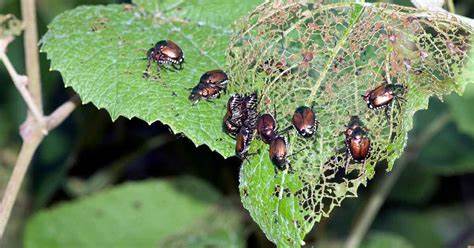
- Black, shield-shaped insects 5-7mm long
- Yellowing and drying of rice plants
- Stunted growth and reduced tillering
- Foul smell when disturbed
- More severe during Tagudin's dry season (Jan-May)
Management Strategies
- Cultural: Remove weeds, especially grasses
- Biological: Conserve egg parasitoids
- Mechanical: Sweep nets for collection
- Chemical: Malathion or diazinon if population exceeds 5 bugs/hill
- Timing: Early morning application when bugs are less active
Identification & Damage
- Small, wedge-shaped insects that jump when disturbed
- Yellow or brown patches on leaves (hopperburn)
- Transmit viral diseases like tungro and grassy stunt
- Stunted growth and reduced yields
- More problematic during continuous cropping
Management Strategies
- Cultural: Avoid excessive nitrogen fertilization
- Biological: Conserve spiders and other predators
- Resistant varieties: Use varieties with Bph genes
- Chemical: Imidacloprid or thiamethoxam for severe infestations
- Monitoring: Yellow sticky traps for early detection
Disease Prevention
Since leafhoppers transmit tungro virus, controlling the vector is crucial. Remove infected plants immediately and avoid planting near infected fields.
Identification & Damage
- Large, golden-brown snails up to 6cm diameter
- Pink egg masses on rice stems and leaves
- Cut young rice plants at water level
- Most damaging 2-3 weeks after transplanting
- Thrives in Tagudin's flooded rice fields
Management Strategies
- Cultural: Drain fields before transplanting
- Mechanical: Handpicking snails and egg masses
- Biological: Ducks can be used to control snails
- Chemical: Metaldehyde or niclosamide baits
- Barriers: Plastic or bamboo barriers around fields
Community Approach in Tagudin
Several barangays organize community handpicking activities, paying children and youth to collect snails and egg masses. This provides income while controlling the pest.


Plant Protection Specialist
For urgent pest identification and control recommendations
Contact: (123) 456-7892
Pesticide Poisoning Hotline
24/7 emergency assistance for pesticide-related incidents
Hotline: 911 or (123) 456-7893
Agricultural Extension Office
Technical assistance and training programs
Contact: (123) 456-7890
Current Alerts
Rice Black Bug Alert
Increased activity reported in lowland areas. Monitor fields closely and apply control measures if threshold is reached.